What to the Slave Is the Fourth of July?
— Reflections For Our Time
Honoring Frederick Douglass and Reimagining Freedom Today
Introduction
Thank you for gathering with me today. We meet not only to commemorate the birth of a nation, but to reflect on the complexities of that birth; to celebrate ideals, yes, but also to question their fulfillment.
Nearly two centuries ago, Frederick Douglass, a man born in chains and forged by struggle, delivered a speech that resonates with as much urgency now as it did on July 5, 1852. His words, “What to the Slave is the Fourth of July?” cut through the noise of parades and fireworks, asking the nation to look honestly at itself. As we stand at the crossroads of progress and today– assault by our own government– let us revisit Douglass’s questions—as living challenges.
Douglass began by honoring the vision of the Founding Fathers, acknowledging their courage and the “sublime principles” of liberty and equality. Yet, he quickly turned to the glaring contradiction at the heart of the American experiment: how could a nation built on freedom sustain the institution of slavery?
He asked, “Are the great principles of political freedom and natural justice, embodied in that Declaration of Independence, extended to us?” His answer, resounding and clear, was no. For while white Americans celebrated liberty, millions of their Black countrymen remained in bondage, their humanity denied.
Today, we are not gathered in a slaveholding republic. The law of the land no longer condones chattel slavery. But Douglass’s question echoes still. What, to the marginalized, is the Fourth of July? What, to those left behind by the American promise—by systemic racism, poverty, exclusion and government corruption —is this celebration of freedom?
We see the legacy of slavery in new forms. The chains are no longer iron, but they are felt all the same. Mass incarceration disproportionately ensnares Black and Brown Americans, removing fathers, mothers, and children from their homes. The deprivation of voting rights, disparities in education, unequal access to healthcare and housing, targeting of LGBTQ+ people, and this direct assault on democracy, persist as reminders that freedom remains unfinished.
Douglass marveled at the contradiction of music and merriment in the face of suffering. “To drag a man in fetters into the grand illuminated temple of liberty, and call upon him to join you in joyous anthems, were inhuman mockery and sacrilegious irony.”
How different are our celebrations today, when fireworks burst above cities where children go hungry and schools crumble from neglect? When the rhetoric of liberty is accompanied by the reality of innocent family members being kidnapped in our streets by men and women wearing black and in masks, protestors are silenced in the streets, books are banned, women who can no longer control their own bodies and an ever-widening gap between wealth and want?
If Douglass stood among us now, would he not see the echoes? Would he not ask: What do these festivities mean to those who cannot afford to join in, who must hide, whose lives are shaped by barriers unseen by others?
Many would prefer to keep such questions in the past, to believe that history’s wounds have healed. But Douglass understood, as we must, that “the destiny of America is in the hands of the American people.” The work of justice is not a chapter concluded, but an ongoing story.
We cannot celebrate liberty fully while so many are denied its fruits. The Fourth of July is not merely a birthday party for a nation, but a summons. If the Declaration of Independence is to be more than parchment and ink, we must make its promises real for all.
Consider the struggles of the present:
• The criminal justice system: The United States has the highest incarceration rate in the world. Black Americans are incarcerated at five times the rate of white Americans. The legacy of the slave patrol echoes in the modern police force. Douglass’s audience would recognize the injustice in these disparities, the echoes of bondage in the bars and cells of our prisons.
• Economic inequality: The racial wealth gap remains staggering. The typical white family has eight times the wealth of the typical Black family. Access to home ownership, capital, and opportunity is still shaped by the color of one’s skin.
• Healthcare disparities: The COVID-19 pandemic laid bare the disparities in healthcare access and outcomes. Black and Indigenous communities suffered disproportionately—not because of choices, but because of systems that have long privileged some and neglected others.
• Voting rights: Efforts to restrict voting access fall disproportionately on communities of color, echoing the era of poll taxes and literacy tests. The struggle for a voice—a full, unencumbered say in the nation’s future—remains as urgent today as in Douglass’s time.
Yet Douglass did not leave his audience in despair. He saw hope in the principles of justice, in the capacity for change, and in the courage of those who demand better. He called on Americans to live up to their creeds. Today, we are called to do the same.
The Fourth of July can be more than a symbol; it can be a catalyst. It can be a day when we rededicate ourselves to the unfinished struggle, when we listen to the stories of those still seeking freedom, and when we resolve that the rights so bravely proclaimed will be truly universal.
To paraphrase Douglass: “If there is no struggle, there is no progress.” The struggle for justice—for equal opportunity, equal dignity, and equal protection—requires us not only to remember history, but to act in our own time.
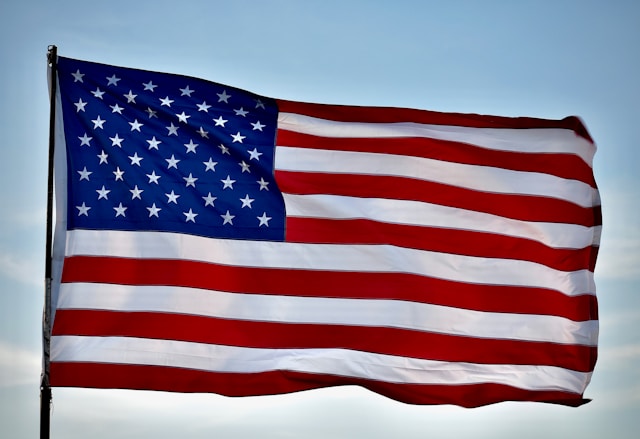
As we gather beneath the flag, as we watch the fireworks, let us remember those who see the celebration from the margins. Let us ask: What does the Fourth of July mean to the dreamer facing deportation, to the hungry child in a crumbling classroom, to the family mourning a loved one lost to violence, neglect – or the impacts of a climate rapidly changing?
If freedom is to be more than a word, we must commit ourselves to the work of justice. We must challenge the systems that perpetuate inequality, amplify the voices demanding change, and honor the sacrifices of those who came before us—not with empty words, but with determined action.
Frederick Douglass’s speech endures because it speaks to the American conscience. It reminds us that patriotism is not blind celebration, but honest reckoning. It is not enough to love one’s country; one must love it enough to demand its best.
Today, let us honor Douglass by turning celebration into commitment, memory into movement. Let us envision a Fourth of July where the songs of freedom ring true for all.
For only then will the promise of America—the dream Douglass believed in, struggled for, and charged us to fulfill—become the shared reality of every American!
Thank you.